
How to mix patterns in a cosy cottage living room
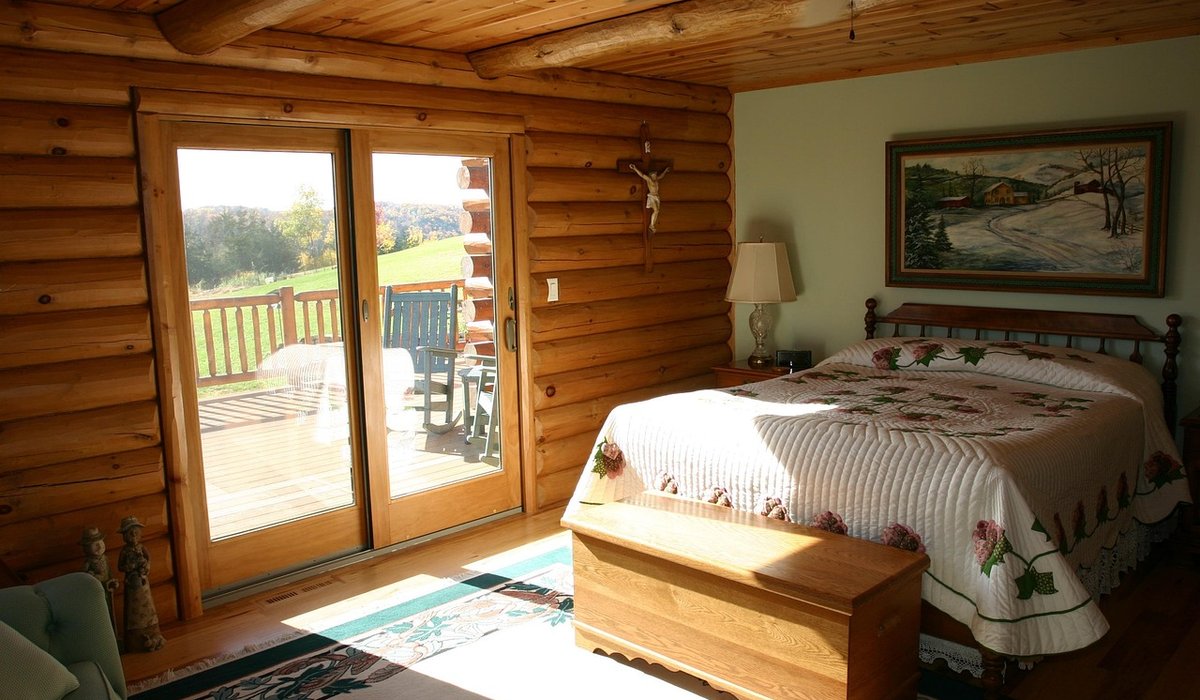
Nothing feels more like a cottage living room than a faded floral cushion resting near a ticking stripe and a rug that has seen a few decades of muddy boots. Pattern is the quickest route to warmth in a small room — and the quickest route to chaos if you let every surface speak at once. The good news is that cottage pattern mixing is not a talent you are born with. It is a set of small decisions, made in a sensible order.
Give every pattern a plain neighbour
The single rule that holds a cottage scheme together is this: for every pattern you introduce, keep something plain immediately beside it. Stripes on the rug? Then plain curtains. Floral cushions on the sofa? Then a plain sofa, or a plain throw underneath them. Busy walls? Plain upholstery everywhere else. Your eye needs somewhere to land, and in a small room it needs it more often, not less.
Think of it as a conversation. Two people talking at once is lively; six people talking at once is a party you want to leave. Three patterns in a modest living room is usually the comfortable maximum, provided each one is separated by a stretch of plain colour or plain texture.
Let plain curtains do the quiet work
Curtains are usually the largest single expanse of fabric in a small living room, which makes them the last place to add a print. Choose a plain linen or cotton in oatmeal, stone, soft grey or a muted version of your accent colour, and let the cushions and rug carry the pattern instead. Plain curtains also stop a low ceiling from feeling crowded, and they keep the view from the window as the main event.
If you want visual interest without pattern, choose texture rather than print: a slubby linen, a wool mix, a subtle herringbone, a woven stripe so faint it reads as plain from across the room. Treat the walls the same way. One flat colour in a soft chalky finish will make everything else look deliberate, whereas a patterned wallpaper demands plain everything else as a trade.
Pair a floral cushion with a striped rug
This is the most reliable pairing in a cottage living room, and it works for a reason. A floral is organic, curvy and slightly irregular. A stripe is orderly and geometric. Put them together and they balance: the stripe gives the floral structure, the floral stops the stripe from feeling like a school uniform.
- Share one colour. If the floral has a faded rose in it, let one of the rug stripes be a similar rose, or a deeper version of the same tone. That repetition is what makes the pairing look chosen rather than accidental.
- Vary the scale. A floral with a repeat of roughly 8–12cm sits beautifully against stripes 3–5cm wide. Two patterns of the same size, however different their motifs, will always look slightly wrong.
- Keep the third element plain. With a patterned cushion and a patterned rug, the curtains, sofa and walls should stay quiet. Add texture with a wool throw rather than another print.
Work in threes: large, medium, small
Rather than counting patterns, count scales. A harmonious cottage room usually contains one large-scale pattern, one medium and one small — and no more than one of each.
For example: a large cabbage-rose or trailing floral on a cushion, a medium ticking stripe or narrow band on the rug, and a tiny ditsy dot or sprig on a lampshade or a single scatter cushion. Anything smaller than a 2cm repeat becomes visual texture rather than a pattern you read, which is useful — but only once.
In small rooms, go bigger rather than smaller. A generous floral on one cushion reads clearly from the doorway. The same motif shrunk onto three cushions turns into fuzz, and fuzz is what makes compact rooms feel cluttered.
Build a tight palette and repeat it
Cottage schemes are forgiving about pattern but strict about colour. Choose two or three colours plus a neutral, and repeat them in every pattern you use. A workable combination might be faded rose, soft sage and oatmeal, or terracotta, denim blue and cream.
Then check the whole room from the doorway. If a pattern introduces a colour that appears nowhere else, it will pull the eye like a loose thread. Either remove it or echo it somewhere small — a candle, a book spine, a single stripe in the rug. Repetition is what makes a mix look intentional.
Edit rather than add when it feels busy
If a cottage living room starts to feel chaotic, resist the urge to rearrange. Take one thing away instead.
- Swap two patterned cushions for plain wool or linen ones, keeping only your favourite print.
- Move a patterned throw off the sofa and drape it over an armchair in the corner, where it reads as a single accent.
- Replace a patterned rug with plain jute or undyed wool, and let the cushions carry the print.
- Hang plain curtains and shift the pattern to a lampshade, where it is small, well lit and contained.
- Count the colours. More than three plus a neutral is usually the real culprit, not the patterns themselves.
Finally, remember that cosiness comes as much from texture as from print. Layer wool, linen, sheepskin and aged wood, and let two or three well-chosen patterns do the talking. A cottage living room should feel collected over time, not styled in an afternoon — and a plain curtain, a floral cushion and a striped rug is a very good place to start.

4 Comments